







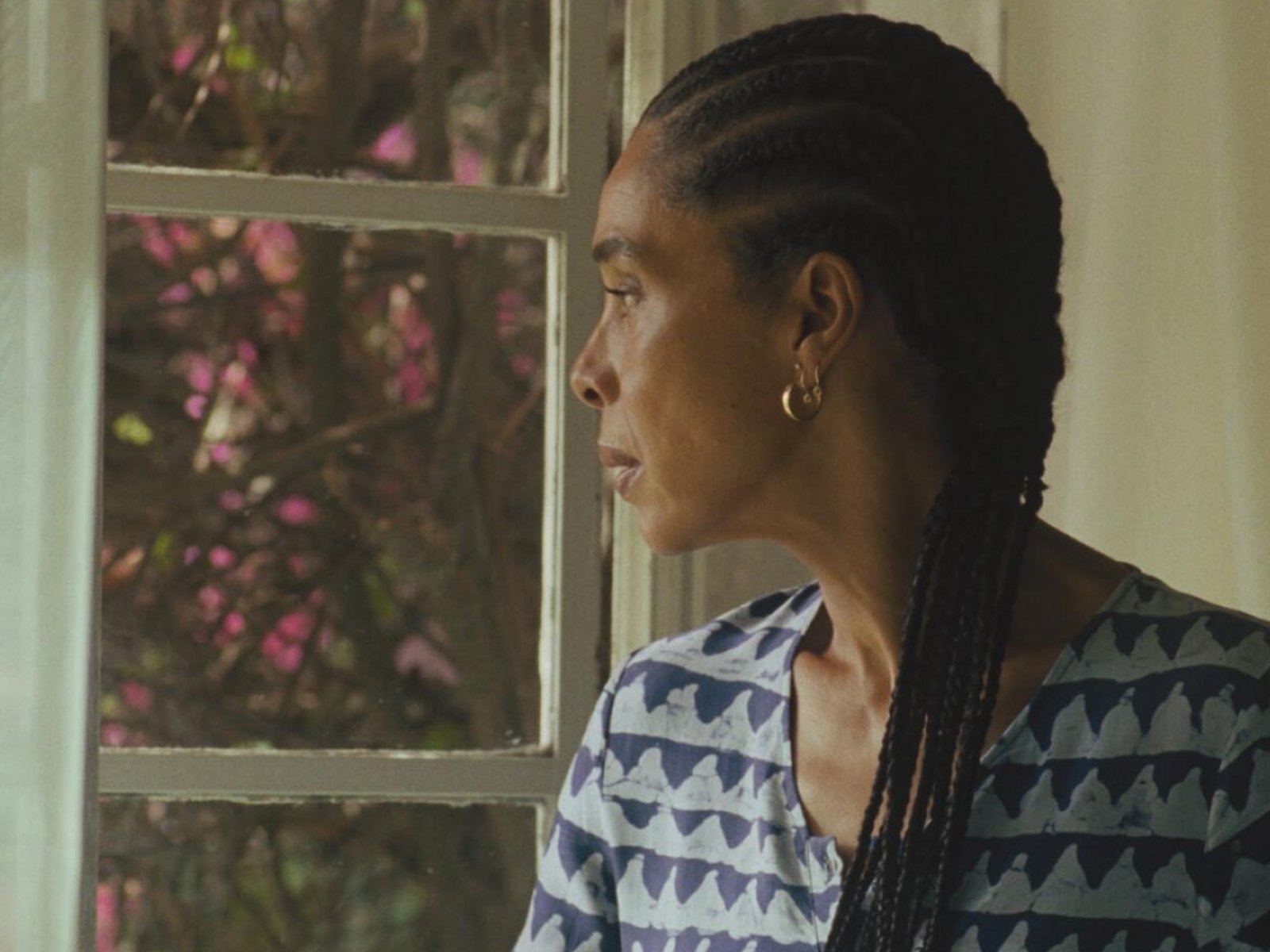
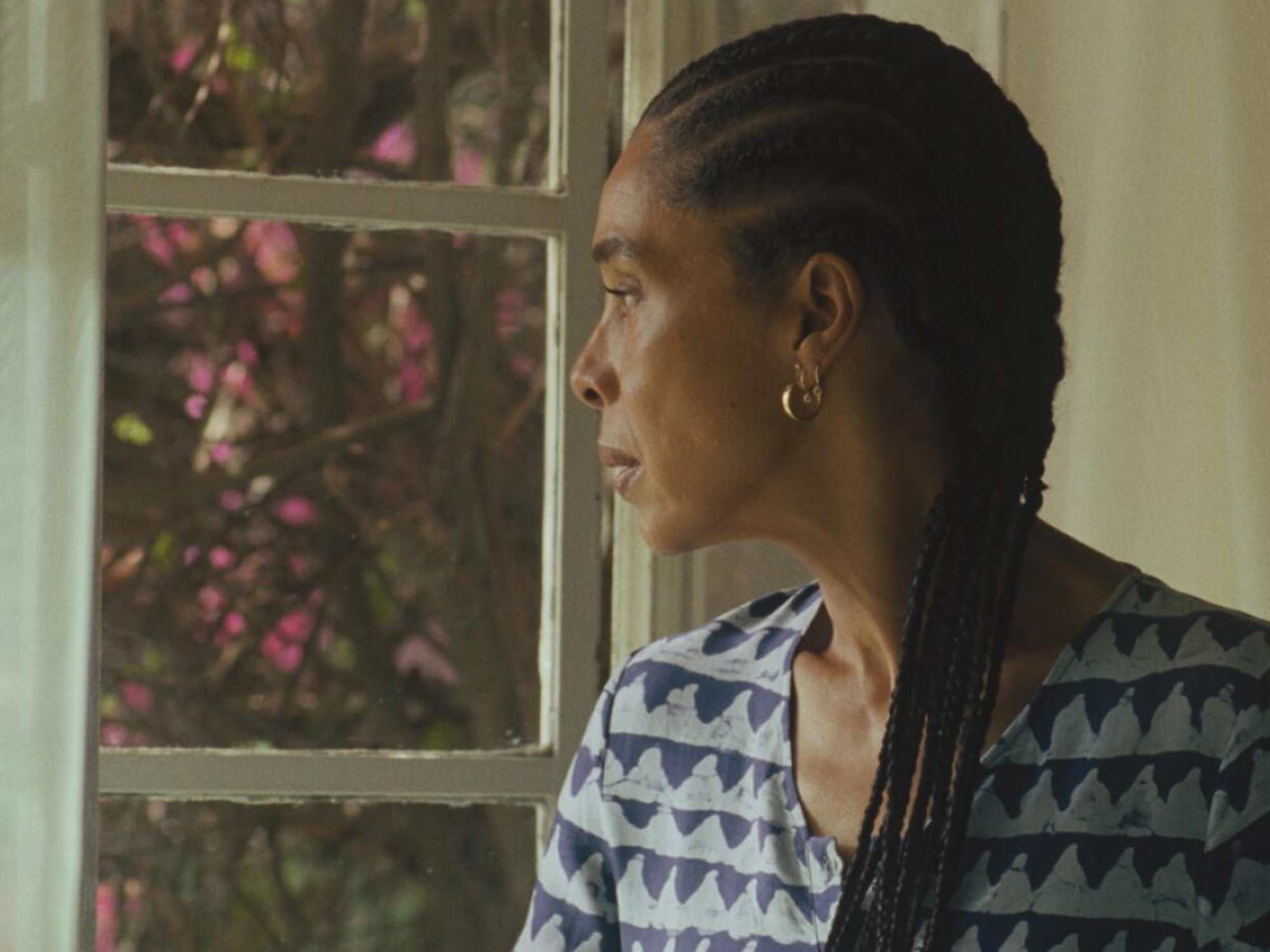
Clarissa (Sophie Okonado) seems on edge the morning of her party. She’s frustrated when her maid fetches the wrong plates out of storage, and even more irritated when the handyman leaves a large mosaic leaning up against her sofa instead of hanging it on the wall. Her teenage daughter doesn’t even want to attend the soirée, adding further friction, while her husband Richard (Jude Akuwudike) is preoccupied with his political job helping an upcoming election campaign. These individual dramas form a tableau of anxieties at her home in Lagos, Nigeria, where she’s never far from memories of her idyllic young adulthood spent whiling away the hours by the water with her friends. At her family’s summer home a young Clarissa (India Amarteifio) spent her time reading and swimming with Ugo (played Danny Sapani as an adult, Kehinde Cardoso in flashbacks) and Peter (David Oyelowo/Toheeb Jimoh), later joined by Sally (Nikki Amuka-Bird/Ayo Edibiri) and Richard (Ogranya). But that was all a long time ago; the years have seen their one-close group drift apart.
Virginia Woolf’s seminal ‘Mrs. Dalloway’ lends twin brother filmmakers Arie and Chuko Esiri’s second feature its basic structure and character names, with Chuko writing the script and both on producing duty. The duel timeline of Clarissa’s past and present slips back and forth easily like the tide lapping at the shore, sensory memory unlocking old emotions over the course of a single day. Similarly, Jonathan Bloom’s languid camera follows Peter, Richard and Sally intermittently as well as Clarissa’s favourite tailor, Aisha (Modesinuola Ogundiwin) whose husband Septimus (Fortune Nwafor) is traumatised by his military experience fighting Boko Haram.
Get more Little White Lies
Transporting a work like ‘Dalloway’ to contemporary Nigeria provides the Esiri Brothers with a canny framework to explore Nigerian identity and culture, particularly for this group of privileged friends whose lives are extremely different from the reality of many. They are educated but sheltered, predominantly speaking English with the clipped received pronunciation that marks their upbringings as the Lagos elite, debating national identity and philosophy over a lazy garden lunch. The inclusion of Aisha and Septimus’ story provides a contrasting perspective, but to those not familiar with the source material it may appear a baffling diversion.
The ensemble both in Clarissa’s past and present are consistently impressive, with the dual roles particularly well-cast and Okonado and Oyelowo offering up some career-best work as erstwhile lovers who occasionally wonder what might have been. Although the film’s glacial pacing does hamper its 125-minute runtime, this is a minor quibble about a film that is otherwise impressive, continuing the work that Arie and Chuko Esiri began in their feature debut Eyimofe (This Is My Desire). Musician Kelsey Lu also warrants a mention; best known for her avant pop music, her third score (following Daughters and Earth Mama) really adds to the texture of Clarissa, imbuing the film with a sense of dreaminess and nostalgia. The delicate balance that is achieved across multiple fronts (comedy and tragedy; past and present; love and hate) is testament to the growing talent of the Esiri twins.