







American motorists would face pain at the pump for months even if the U.S. and Iran strike a peace deal and move quickly to reopen the Strait of Hormuz, according to energy experts.
“It is all contingent on when boats start moving through the Strait of Hormuz,” GasBuddy petroleum expert Patrick De Haan told CBS News. “If and when that happens, it will be a very long, multi-month to multi-year process for things to fully normalize.”
Across the U.S., a gallon of regular gas on Tuesday sold for an average of $4.29, down from more than $4.50 in May, according to AAA. Gas averaged $2.98 a gallon just before the U.S. and Israel attacked Iran at the end of February.
“We won’t see those levels until potentially mid-to-late 2027,” De Haan predicted, referring to pre-war fuel prices.
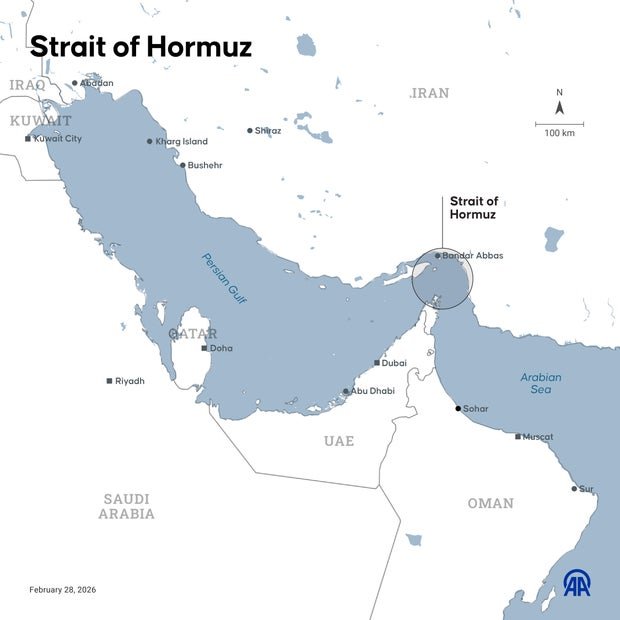
The Strait of Hormuz, a strategically vital waterway connecting the Persian Gulf to the Arabian Sea, normally accounts for roughly 20% of global crude and liquefied natural gas supplies.
Bedirhan Demirel/Anadolu via Getty Images 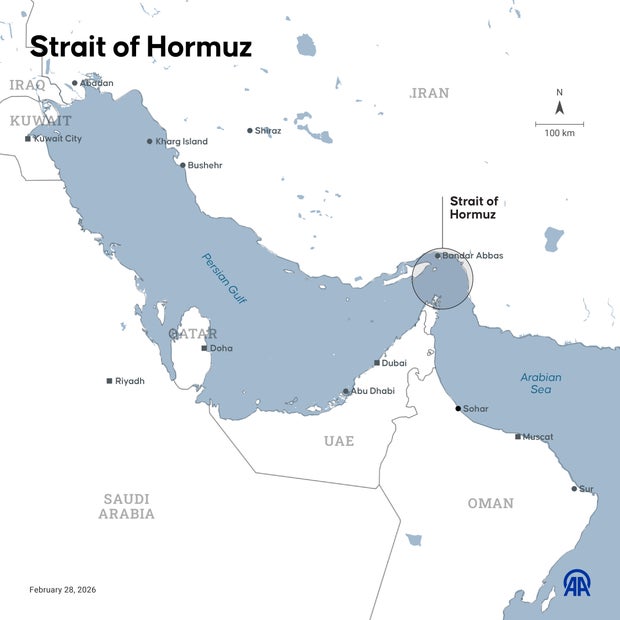
Although oil prices are likely to fall immediately if a deal ending the Iran war is announced, gas prices will fall more slowly because it will take time for more oil tankers to resume traveling through the strait and for global oil supplies to rebound. Crude would then need to be delivered to refineries so it can be turned into gas, diesel and other energy products.
“Even if overnight, Brent prices were to drop on positive sentiment around an agreement, it will take time for tanker flows through the strait to recover and for refiners to get back up to speed,” Jennifer Li, senior geopolitical analyst at Rystad Energy, told CBS News.
Oil prices, set on global markets, account for roughly 57% of the cost of a gallon of gas in the U.S., according to the Energy Information Administration. Refining, federal and state taxes, and distribution and marketing expenses account for the remaining costs.
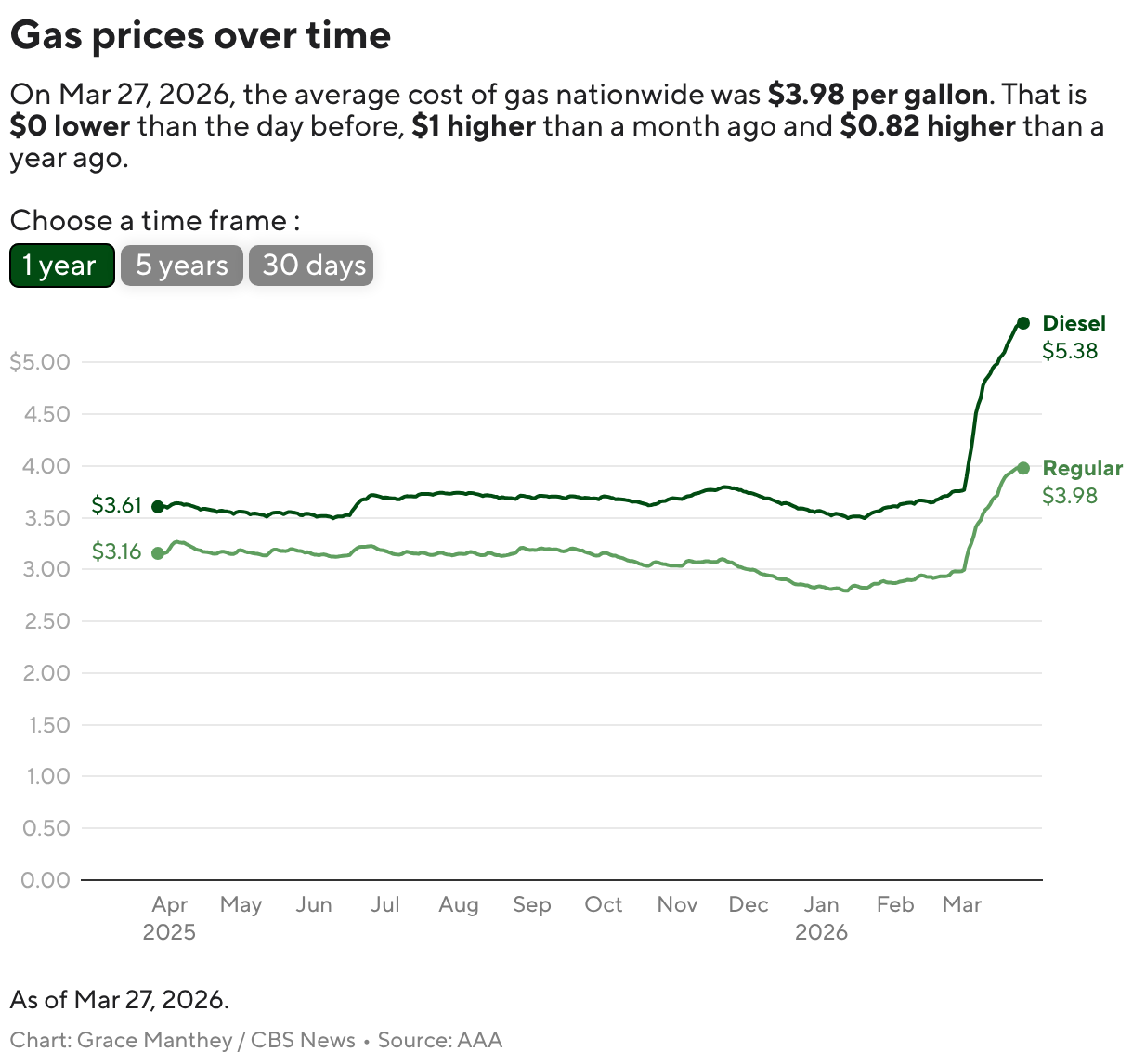
“When a deal is announced, we’ll see an instant drop in crude, but that won’t be reflected in gasoline prices because supply is still tight,” Richard Joswick, executive director and global head of near-term oil analysis at S&P Global Energy, told CBS News.
Global oil inventories are low and will take time to replenish, keeping gas prices elevated for the foreseeable future, he said.
Once the Strait of Hormuz reopened, oil-producing nations would need weeks to restart facilities and return to typical output levels. De Haan likened the process to trying to fill an Olympic-size swimming pool with a garden hose.
“Most of what comes through the strait will be used to meet demand. It’s going to take a longer time for inventories to rebuild,” he said.
“It could then take months for that oil to hit the market,” De Haan noted. “This is a long-haul story.”
U.S. inflation in April hit an annual rate of 3.8%, the highest since May 2023, as the Middle East conflict drove up energy costs, according to the latest Consumer Price Index.
Americans have spent roughly $401 more per household for gas and diesel since the Iran war erupted, according to an estimate by Brown University researchers.