







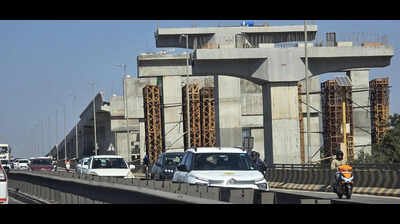
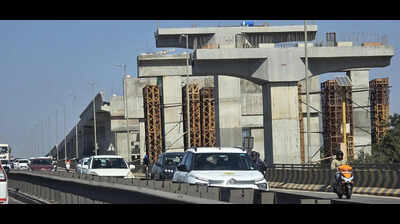
Bengaluru: A technical and commercial feasibility study conducted by the Indian Institute of Science’s Sustainable Transportation Lab has found that the upcoming Blue Line of Namma Metro could be fully powered by solar energy.The corridor, once completed, will be 55km long and will stretch from the Central Silk Board to Kempegowda International Airport (KIA) in north Bengaluru. The report, titled ‘Assessing the Potential of Directly Using Solar Power to Run the Operations of Blue Line of Namma Metro,’ claims that land already owned by Bangalore Metro Rail Corporation Limited (BMRCL) is enough for the shift.The study, conducted between Aug 2025 and March 2026 in collaboration with BMRCL, was privately funded by HSBC Ltd under its corporate social responsibility (CSR) programme. It was carried out across all four construction packages, covering interface design and substation audit, traction power system modelling, solar resource mapping, and train traction performance alongside scenario analysis.Depending on BMRCL’s approved simulation reports, the study factored in 21 trains running at two-minute headway. It also mapped physical solar resources across all 30 stations, elevated viaducts, and depot rooftops.It revealed that by installing solar panels on station rooftops, elevated viaduct parapets, and depot roofs, BMRCL can generate enough power to meet the corridor’s entire annual energy demand. The initial capacity will easily be consumed during daytime operations, eliminating the risk of sending power back into the grid and instantly wiping out over a third of the corridor’s annual energy bills.Justifying the economic investment required, the study stated: “All 30 stations are elevated… accommodating up to 50,000 solar panels at 29.7MWp total capacity. This Phase 1 investment of Rs 48 crore to Rs 63 crore generates Rs 36.4 crore in annual electricity savings from year 1, with a simple payback of under two years and a 25-year net present value of Rs 370-385 crore.”It further found that a full corridor deployment would deliver Rs 61 crore in annual savings.“The Blue Line has exceptional solar potential, a traction system designed to accommodate it, and a regulatory framework that already supports deployment. The economics are decisive. This is not a research aspiration — it is a ready-to-tender infrastructure investment that will deliver returns for decades,” said Ashish Verma, convener of the Sustainable Transportation Lab.