







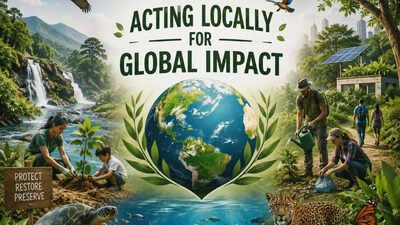
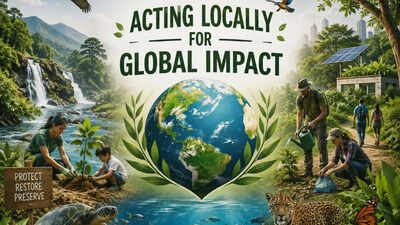
As the world observes Biodiversity Day today under the theme “Acting locally for global impact”, it is important to first understand what biodiversity truly means, and why it matters to everyday life.The United Nations defines biological diversity as the variety of all living organisms, including plants, animals, and microorganisms, as well as the genetic differences within each species. It describes biodiversity as the foundation of human civilization.Nature provides essential life-support systems and to raise awareness about its importance, the United Nations observes the International Day for Biological Diversity every year, highlighting the urgent need to protect ecosystems that sustain life on earth.
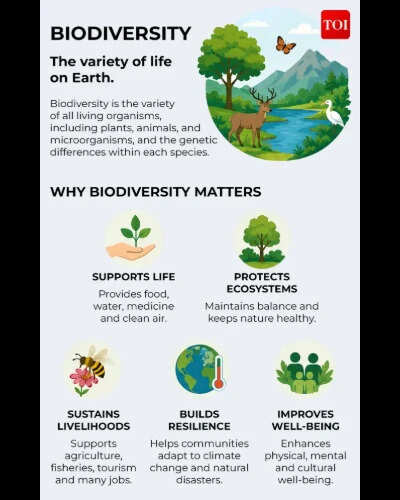
The variety of life on earth
The impacts of biodiversity loss go far beyond the environment. They directly affect food systems, water availability, livelihoods, climate stability, and disaster resilience. Marginalized groups and coastal communities are often the most affected, as their survival is closely tied to natural ecosystems.Experts increasingly emphasize that biodiversity conservation cannot succeed through government action alone. Local communities hold valuable traditional ecological knowledge and sustainable practices that can play a crucial role in restoring ecosystems and protecting biodiversity.The growing biodiversity crisisDespite its importance, biodiversity is declining at an alarming rate due to human activity, habitat destruction, climate change, and overexploitation of natural resources. Scientists warn that this loss does not only threaten ecosystems, but also human health and survival.A major concern linked to biodiversity loss is the increased risk of zoonotic diseases, illnesses that spread from animals to humans. Healthy ecosystems act as a natural buffer against such outbreaks, while degraded environments increase vulnerability to pandemics.A recent study by the Energy and Resources Institute (TERI) highlights that coastal and marine ecosystems such as coral reefs, wetlands, mangroves, sand dunes, seagrass beds, forests, and traditional agricultural systems are under severe pressure from habitat degradation, overuse of resources, and climate-related risks. These ecosystems are vital for millions of people, especially fishers, farmers, women, and local communities who depend on them for food security, income, and resilience.The impacts of biodiversity loss go far beyond the environment. They directly affect food systems, water availability, livelihoods, climate stability, and disaster resilience. Marginalized groups and coastal communities are often the most affected, as their survival is closely tied to natural ecosystems.Experts increasingly emphasize that biodiversity conservation cannot succeed through government action alone. Local communities hold valuable traditional ecological knowledge and sustainable practices that can play a crucial role in restoring ecosystems and protecting biodiversity.Why local action matters: Voice from the groundDr. Susmita Mitra, lead author of the TERI report ‘Community-Led Biodiversity Restoration in Coastal India: Local Actions Creating Global Impact’ says, “Biodiversity restoration becomes more sustainable and resilient when local communities become active stewards of ecosystems rather than passive beneficiaries of conservation programmes. The experiences documented under GEF-SGP India OP7, executed by the MoEF&CC, GoI, implemented by UNDP, and coordinated nationally by TERI, demonstrate how community participation, women’s leadership, and traditional ecological knowledge can collectively contribute to global biodiversity goals under the Kunming–Montreal Global Biodiversity Framework.”She says further that biodiversity restoration is not only an ecological process, but also a social and institutional process deeply linked with livelihoods, local governance, and community resilience.“Across coastal India, we documented how fishing communities are restoring marine habitats through artificial reefs and ghost gear management, women are leading seaweed-based marine restoration initiatives, and local communities are reviving sand dunes, sacred groves, and indigenous crop systems. These experiences show that small-scale community-led restoration efforts can generate meaningful ecological and socio-economic outcomes while contributing directly to global biodiversity and climate resilience agendas.”Ambuja Foundation’s chief operating officer Chandrakant Kumbhani says that community development at the biodiversity loss is a global challenge, but its solutions are deeply rooted in local action.“Across rural India, communities are already experiencing the effects of environmental degradation, including declining soil health, water scarcity, and loss of native species. However, small, consistent community-led efforts are showing signs of positive change.In Gujarat, for example, farmers and village institutions are developing dense native micro-forests on small patches of community land using the Miyawaki method. Over time, these green spaces are improving soil quality, retaining moisture, attracting birds and pollinators, and restoring local biodiversity. They are also demonstrating how ecological restoration can support agriculture and strengthen rural livelihoods.
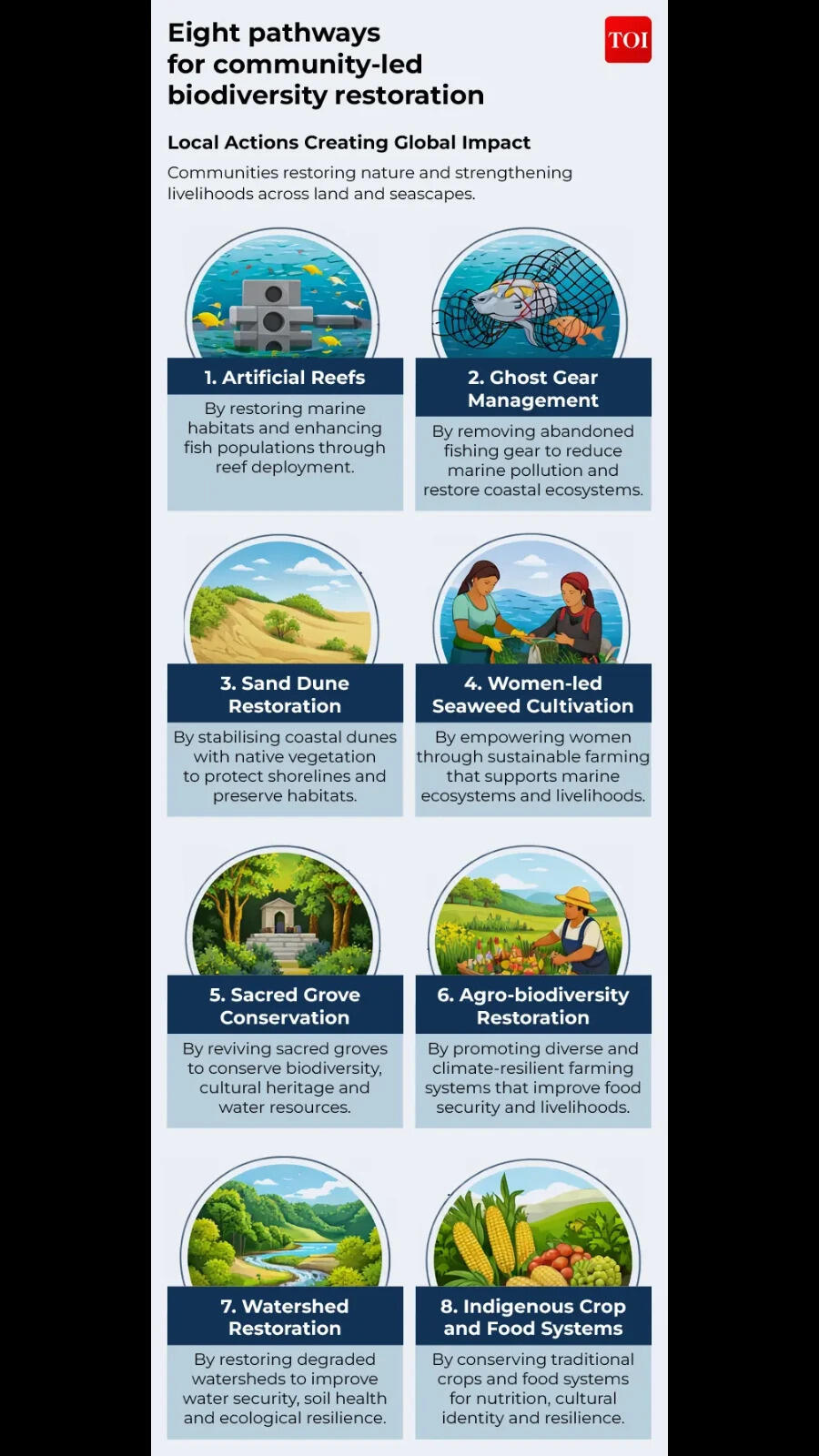
Eight pathways for community-led biodiversity restoration
Can we conserve the damage?On March 17, the environment ministry submitted India’s seventh national report (NR-7) to the Convention on Biological Diversity (CBD), reaffirming its commitment to the three objectives of the convention: conservation of biological diversity, sustainable use of its components, and fair and equitable sharing of benefits arising from genetic resources.Read Full Press ReleaseThe press release states that India has substantially strengthened biodiversity-inclusive land and seascape planning. Recorded Forest Area stands at 7,75,377 km2 (23.59% of geographical area), of which forest cover constitutes 5,20,365 km2 (15.83%). Total Forest & Tree Cover has reached 8,27,356.95 km2 (25.17%), reflecting sustained spatial planning integration. The number of notified Ramsar wetlands of international importance have expanded from 26 in 2014 to 98 as of 2026.A case study, prepared under GEF-SGP India OP7, executed by the environment ministry, implemented by UNDP, and coordinated nationally by TERI, was conducted recently to understand real-life interventions within complex socioecological systems. The report was titled as ‘Community-Led Biodiversity Restoration in Coastal India: Local Actions Creating Global Impact’.A recent study by the Energy and Resources Institute (TERI) highlights that coastal and marine ecosystems such as coral reefs, wetlands, mangroves, sand dunes, seagrass beds, forests, and traditional agricultural systems are under severe pressure from habitat degradation, overuse of resources, and climate-related risks. These ecosystems are vital for millions of people, especially fishers, farmers, women, and local communities who depend on them for food security, income, and resilience.Adopting a qualitative, evidence-based, and narrative-oriented approach to document community-led biodiversity restoration initiatives implemented under GEF-SGP India OP7, the case studied local communities’ role in biodiversity conservation.The study revealed 5 key points:
- Community-led restoration varies by location but follows common goals
Restoration efforts differ based on local ecology and livelihoods, but all aim to restore biodiversity while supporting community needs.
- Ecosystem restoration improves natural habitats and resilience
Initiatives like artificial reefs, sand dune restoration, watershed management, and sacred grove revival help rebuild ecosystems and protect coastal and rural environments.
- Local conservation is linked with livelihoods and income generation
Activities such as seaweed farming, agro-biodiversity restoration, and indigenous crop conservation improve food security and create sustainable livelihoods.
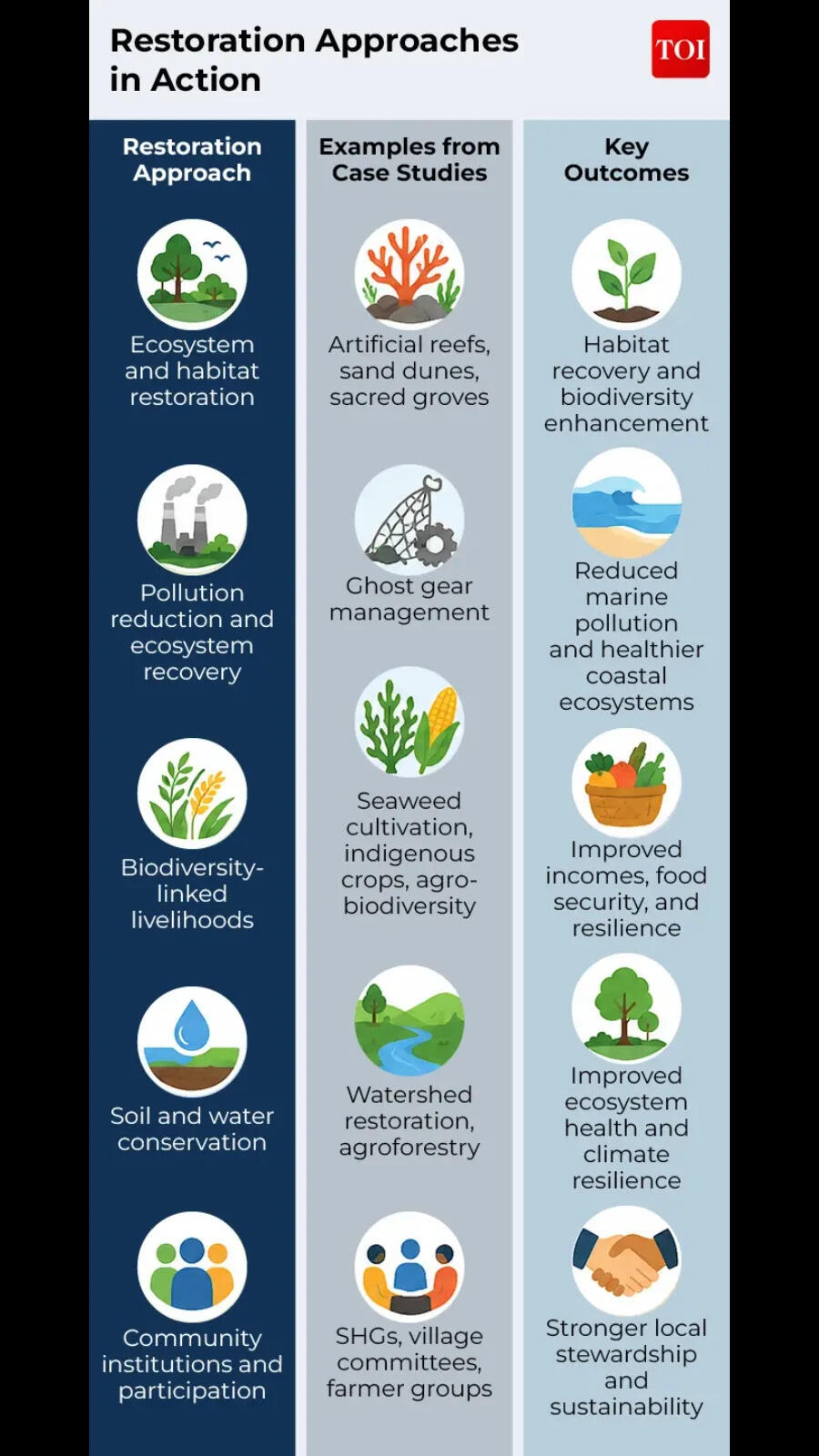
5 key points
- Community institutions are essential for successful restoration
Village committees, women’s groups, farmer collectives, and youth groups play a key role in planning, monitoring, and managing biodiversity projects.
- Women and youth are key drivers of biodiversity action
Women lead many restoration and livelihood initiatives, while youth contribute to awareness, monitoring, and conservation efforts, strengthening long-term community ownership.As Kumbhani notes, when communities take ownership of their environment, even small local actions can create long-term ecological impact, proving that biodiversity conservation begins at the grassroots level,” he says.What can you do to save nature on your level?Individual actions can still play a major role in protecting nature. From reducing plastic waste to supporting native plants and wildlife, small lifestyle changes can collectively help preserve biodiversity and reduce environmental damage.Environmentalists encourage people to plant native trees and support local greenery instead of decorative exotic species, which often fail to support local birds, insects and ecosystems.Reducing the use of single-use plastic, conserving water and electricity, and keeping public spaces such as lakes, parks and rivers clean can also significantly reduce pressure on natural habitats.Experts also advise people to avoid disturbing bird nests, feeding wildlife processed food or purchasing illegal animal products.Choosing sustainable products, supporting local farmers and using public transport, cycling or walking instead of private vehicles can further help reduce pollution and carbon emissions. Awareness campaigns, community clean-up drives and educating children about nature conservation are also being seen as important steps towards protecting biodiversity for future generations.